
CRG Seminar: Between ‘Community’ and ‘Custom’: Mining, Land, and Distributional Conflict in Rural South Africa
Primary tabs
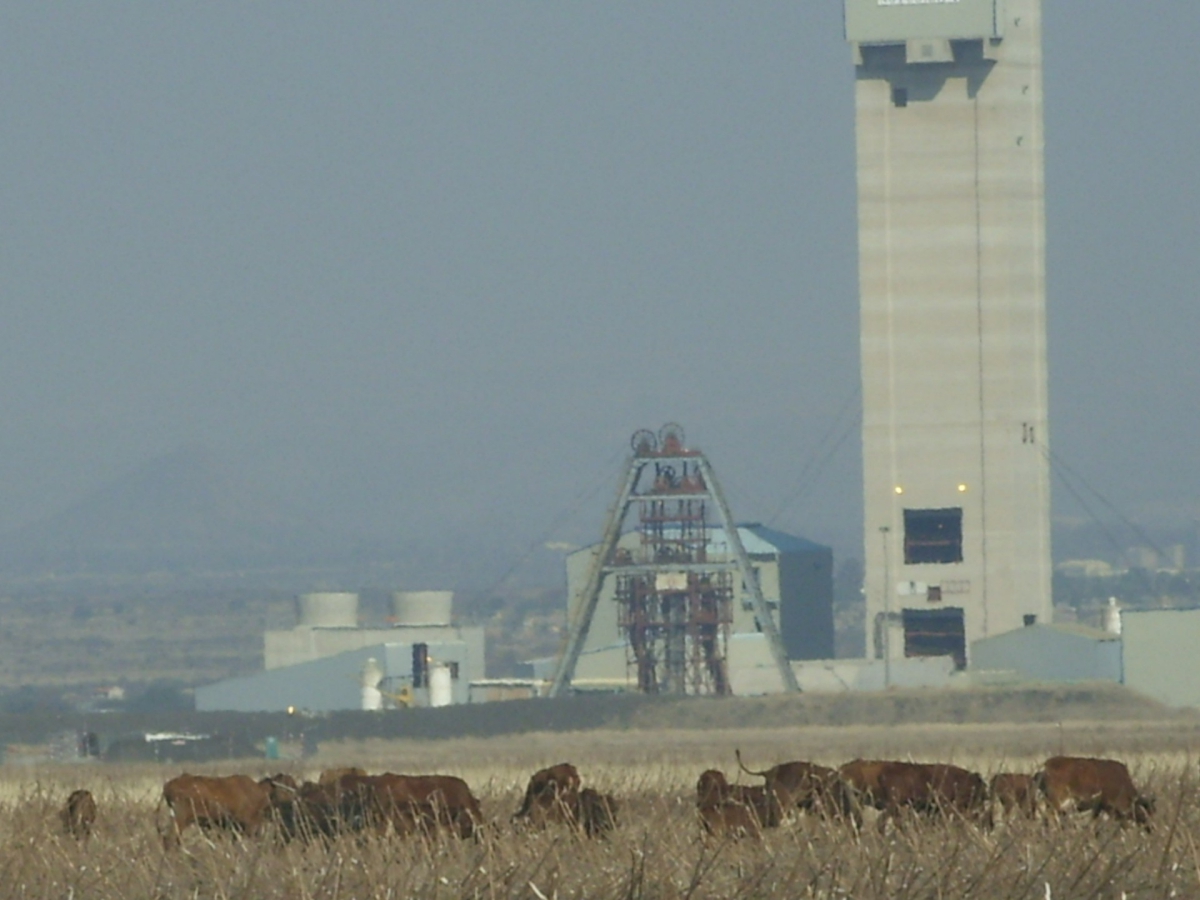
This seminar examines contemporary modalities of distributional conflict in rural South Africa, focusing on the impacts of the rapid expansion of platinum group metal extraction in areas where land is held under customary tenure systems. Conflict emerges amid rapid socio-economic transformations driven by mining-led land dispossession and the growing dominance of market exchange as the primary mechanism of wealth distribution in a rural political economy historically structured around subsistence agriculture and other land-based livelihoods. Mining has entrenched an asocial and exclusionary model of development in which the benefits derived from mineral extraction are concentrated in the hands of local elites, who position themselves as representatives of ‘traditional communities’. Under these conditions, mining royalties and development initiatives become mechanisms for elite accumulation, deepening the marginalisation of ordinary villagers and generating localised struggles not only over mineral-rich land and mining revenues, but also over social membership and belonging.
Professor Mnwana argues that these struggles reflect not only the historical distortion of African customary systems of landholding under colonialism and apartheid, but also the attenuation of “community” as a shared social principle. To better understand these dynamics, he proposes that both “custom” and “community” must be analytically extricated from the structural forces underpinning what he terms the “definition paradigm” — a framework that reduces them to fixed, externally imposed, legally and administratively defined categories. Instead, they should be conceptualised as relatively autonomous local institutional domains, located within the social imaginary, which local social actors may invoke, negotiate, share, contest, or even reject in struggles over land, authority, belonging, and distributive justice.
Speaker
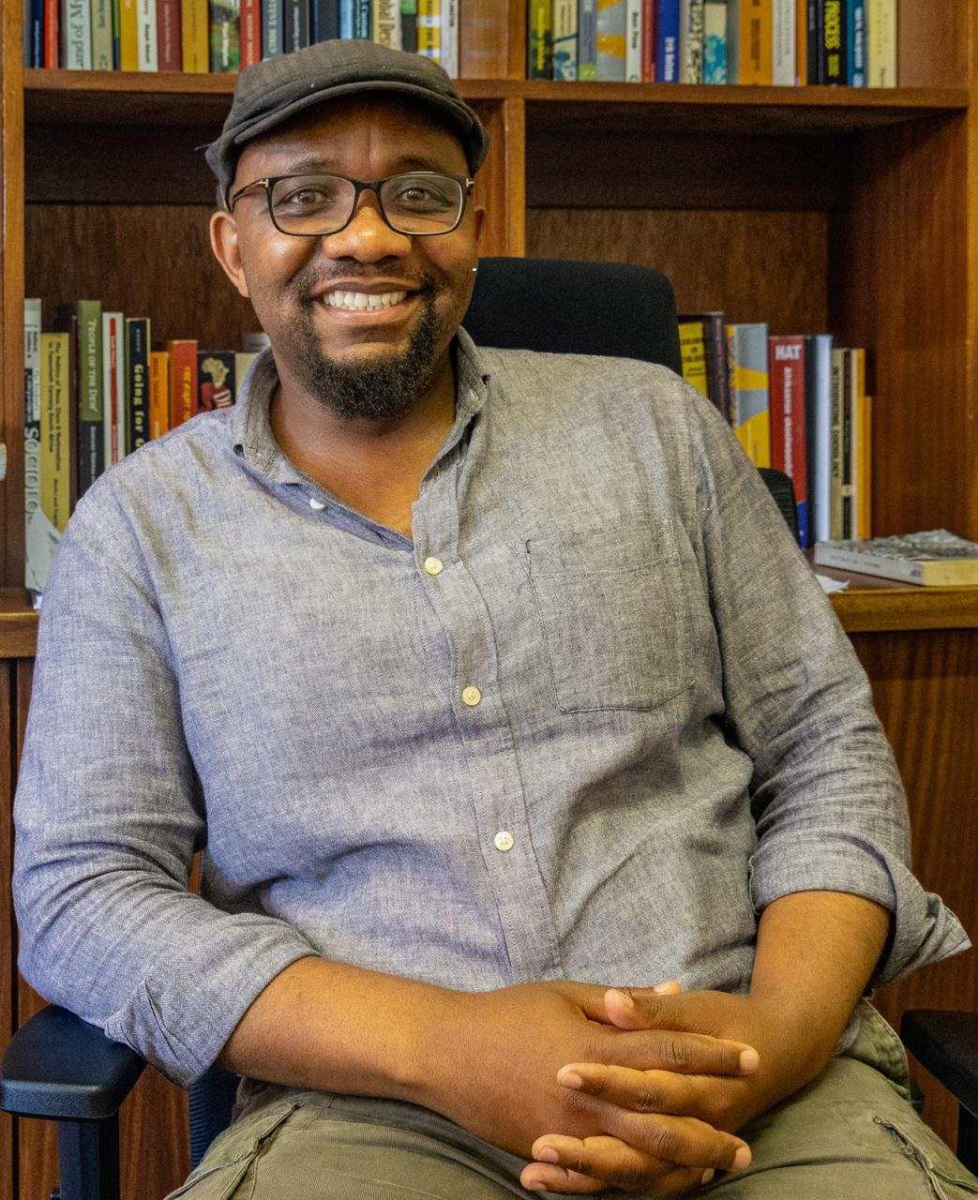
Sonwabile Mnwana is a Professor of Sociology and NRF-SARChI Chair in Sustainable Rural Futures at Rhodes University, and an Honorary Fellow at the Centre of African Studies, University of Edinburgh. He holds a PhD in Social Sciences, specialising in the sociology of development. He previously served as Associate Professor and Head of Department at the University of Fort Hare, and as Deputy Director and senior researcher at the Society, Work and Politics Institute (SWOP), University of the Witwatersrand. He also held a postdoctoral fellowship at the University of Cape Town.
His research focuses on resource extraction, land, and rural political economy. Over nearly two decades, he has led several research projects examining the impacts of mining on rural communities, particularly in relation to land, customary tenure, and distributive struggles in South Africa’s former homelands. He has published widely in leading journals and edited volumes, leads multiple collaborative research projects, and works closely with international scholars and institutions. He served as President of the South African Sociological Association from 2016 to 2017 and has supervised numerous postgraduate students to completion.
He has received several prestigious research fellowships and awards, including a Visiting Fellowship at the Stellenbosch Institute for Advanced Study (STIAS) in 2019 and a fellowship at the Institute for Advanced Studies in the Humanities (IASH), University of Edinburgh in 2020. He was awarded the University of the Witwatersrand Exceptional Research Recognition Award in 2016, as well as the Vice-Chancellor’s Award for Research Excellence at University of Fort Hare in 2019 and 2021. He is also an NRF-rated researcher. In November 2025, he was awarded a prestigious Tier 1 South African Research Chairs Initiative (SARChI) Chair in Sustainable Rural Futures by the National Research Foundation.
Date, time and location
25 June 2026
15:00-17:00
Herta Mohr Building / Faculty of Humanities, Witte Singel 27a, 2311 BG Leiden
Room 0.31
Registration
Posted on 12 May 2026, last modified on 12 June 2026