
New year, new discoveries
Working in the African Library, hundreds of new items pass our desks each month. We try to make these items as easily available as possible, through solid metadata and by providing subject keywords with each item. Nevertheless, sometimes the most interesting discoveries only reach you by holding the physical item in your hands, and searching for the story behind the books. Here are a few of the items that caught my special attention recently.
Algériennes surexposées: Marc Garanger dans la guerre d’Algérie / Zalia Sékaï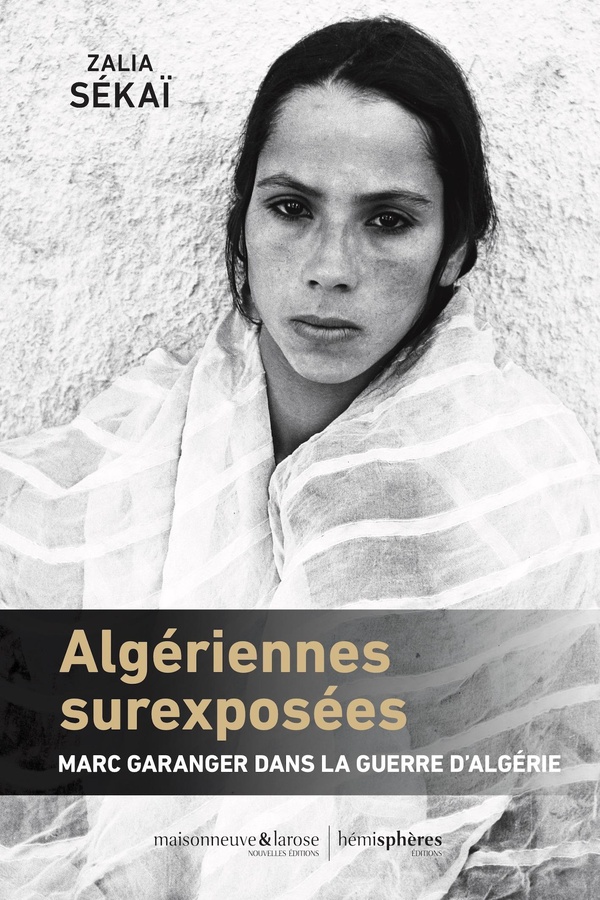
This book caught my attention because of the penetrating gaze of the girl or woman portrayed on its cover. The well-illustrated monograph, written by Sékaï, is connected to a photo exhibition with the same name. Together they have recently drawn renewed attention to a series of photographs taken in 1960, during the Algerian War.
The pictures were taken by Marc Garanger (1935-2020), a photographer who served in the French army at the time. In 1960, he was sent to the Kabyle area of Ain Terzine and its surrounding villages, to take identity photographs of persons forcibly displaced from their villages to so-called camps de regroupement (regroupment camps). Since many men had left their villages to join the struggle, most of these over 2000 photographs depict women, who were forced to remove their head coverings for the picture. Garanger submitted a selection of these photographs to Prix Niépce in 1966, winning the prize, and in 1982 he used them for a photobook, entitled Femmes algériennes, 1960. The portraits became well-known, and have since been exhibited in numerous exhibitions worldwide. One of the portraits was even used as the cover picture for a Penguin edition of Frantz Fanon’s The Wretched of the Earth.
The story behind these pictures, however, remains controversial, as to the context in which they were taken and their further use and interpretation, in relation to the women photographed. The differences in perspectives remain, also after the photographer republished the photographs in a later, more contextualised, edition of the photobook, and revisited the people and area where the photographs were taken in 2004. This current work by Zalia Sékaï is a renewed attempt to provide historical and sociological background to these much-contested images.
British colonisation of Northern Nigeria, 1897-1914: a reinterpretation of colonial sources / Mahmud Modibbo Tukur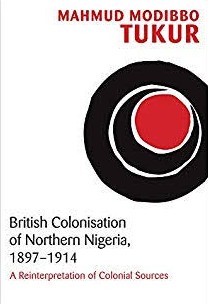
This book is an edited version of the doctoral dissertation entitled The imposition of British colonial domination on the Sokoto Caliphate, Borno and neighbouring states (1897–1914): a reinterpretation of colonial sources submitted by Mahmud Tukur at Ahmadu Bello University (ABU) in 1979. The piece was initially meant as an MA thesis, but was upgraded to a PhD dissertation based on its outstanding quality. It can be seen as a counter-thesis to The British occupation and the development of Northern Nigeria, 1987-1914, a dissertation submitted to the University of London in 1965 by Abel O. Anjorin. The two dissertations are completely opposite in their views on the British colonisation. Where Anjorin portrayed it as a “righteous intervention necessary for the elimination of injustice”, Tukur demonstrated its violent and exploitative character. One of Tukur’s supervisors, Dr Yusufu Bala Osman, is said to have once stated that the study was “the best PhD thesis written by anyone, anywhere in the world, on any aspect of Nigerian history since 1960”.
While the book itself is therefore interesting for its contents, the life and passing of its writer Mahmud Tukur is equally intriguing. As a distinguished history scholar and teacher, he became Head of the History Department and Dean of the Faculty of Arts and Social Sciences at ABU. He was an activist and trade unionist, who, as the National President of the Academic Staff Union of Universities in Nigeria (ASUU), lead the first nation-wide strike for better material conditions, university autonomy, and democracy in 1981. On 15 November 1988, his body was found near his car along the Zaria-Kaduna road. His death was never investigated.
FESPACO catalogues 2023, 2021 Pro and 2023 Pro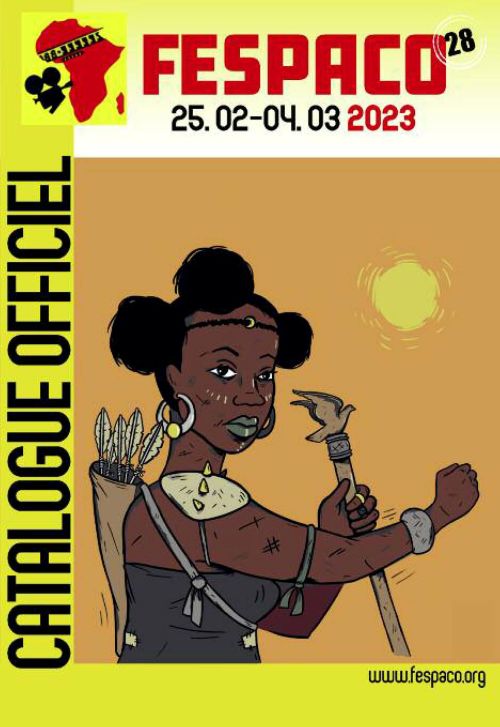
As the person responsible for the film collection of the African Library as of 2025, I was very happy to find amidst the new books, the FESPACO festival catalogues for the years 2021 and 2023. FESPACO (Festival Panafricain du Cinéma et de la Télévision de Ouagadougou) is the oldest and largest film festival on the continent, taking place bi-annually in Burkina Faso’s capital, Ouagadougou. It only accepts films by African filmmakers and chiefly produced in Africa for competition. The catalogues contain interesting titles and background information on films and documentaries to be considered for acquisition for the African Library. In the past two years, a shift has been made from collecting DVD’s to collecting and making available online films for the library. Hopefully some of the titles in these catalogues can be added to our extensive collection.
Want to make your own discoveries in the African Library? Come and visit! A selection of our newest items is always on display. Or have a look at the monthly new titles. Interested in a specific topic? Subscribe to our alert service.
Germa Seuren
Sources
Bangura, Y., Beckman, B., Ibrahim, J., & Mustapha, R. (1988). Tribute to Mahmud Modibbo Tukur. Review of African Political Economy, 15(43), pp. 136–137. https://doi.org/10.1080/03056248808703801
Cole, T. (2019, 6 February). When the Camera Was a Weapon of Imperialism. (And When It Still Is.). New York Times Magazine. https://www.nytimes.com/2019/02/06/magazine/when-the-camera-was-a-weapon-of-imperialism-and-when-it-still-is.html
Falęcka, K. (2023). Woman as Battleground: Marc Garanger’s Identity Photographs from Algeria and their Long Afterlives. Third Text, 37(1), 44–60. https://doi.org/10.1080/09528822.2023.2211468
Fashina, Dipo & Ladan, Usman (2016). Preface. In: Tukur, Mahmud Modibbo, British Colonisation of Northern Nigeria, 1897-1914: a reinterpretation of colonial sources, pp. xiii-xvi
Isa, Nasir F. (2016). Foreword. In: Tukur, Mahmud Modibbo, British Colonisation of Northern Nigeria, 1897-1914: a reinterpretation of colonial sources, pp. xvii-xix
Michel, Nicolas & Langevin, Carole (2024, 13 July). Photographie : les portraits marquants de Marc Garanger en pleine guerre coloniale en Algérie. Jeune Afrique. https://www.jeuneafrique.com/1578165/culture/photographie-1960-en-pleine-guerre-coloniale-des-algeriennes-devoilees-par-marc-garanger/
Naggar, C. (2013, 23 April). Women Unveiled: Marc Garanger’s Contested Portraits of 1960s Algeria. Time. https://time.com/69351/women-unveiled-marc-garangers-contested-portraits-of-1960s-algeria/
Phéline, C. (2025, 15 October). Marc Garanger, photographe de l’Algérie en guerre et au-delà. Histoire coloniale et postcoloniale. https://histoirecoloniale.net/marc-garanger-photographe-de-lalgerie-en-guerre-et-au-dela/
Read more
Abubakar, T. (1990). The essential Mahmud : selected writings of Mahmud Modibbo Tukur. [s.n.]
Sékaï, Z. (2008, 27 November). Algériennes surexposées. Zalia Sékaï. https://www.zaliasekai.net/article-25215010.html
Posted on 20 January 2026, last modified on 27 January 2026