
Looking back on the ‘Mining Matters’ conference: Resource and Mineral Extraction Across Africa
 Organised by the final cohort of Research Master students of African Studies - under the supervision of Prof. Jan-Bart Gewald - the conference Mining Matters: Resource and Mineral Extraction Across Africa, was a huge success. The conference, hosted by the ASCL from 25 to 27 March, allowed seasoned scholars, professors and professionals as well as students and PhD candidates to share knowledge from their various disciplines and research projects concerning resource extraction in Africa.
Among the presenters were historians, archaeologists, anthropologists and even a film maker. Each and every one of them provided fresh perspectives to the conference, broadening the scope of the subject and creating a true learning place for all attendees.
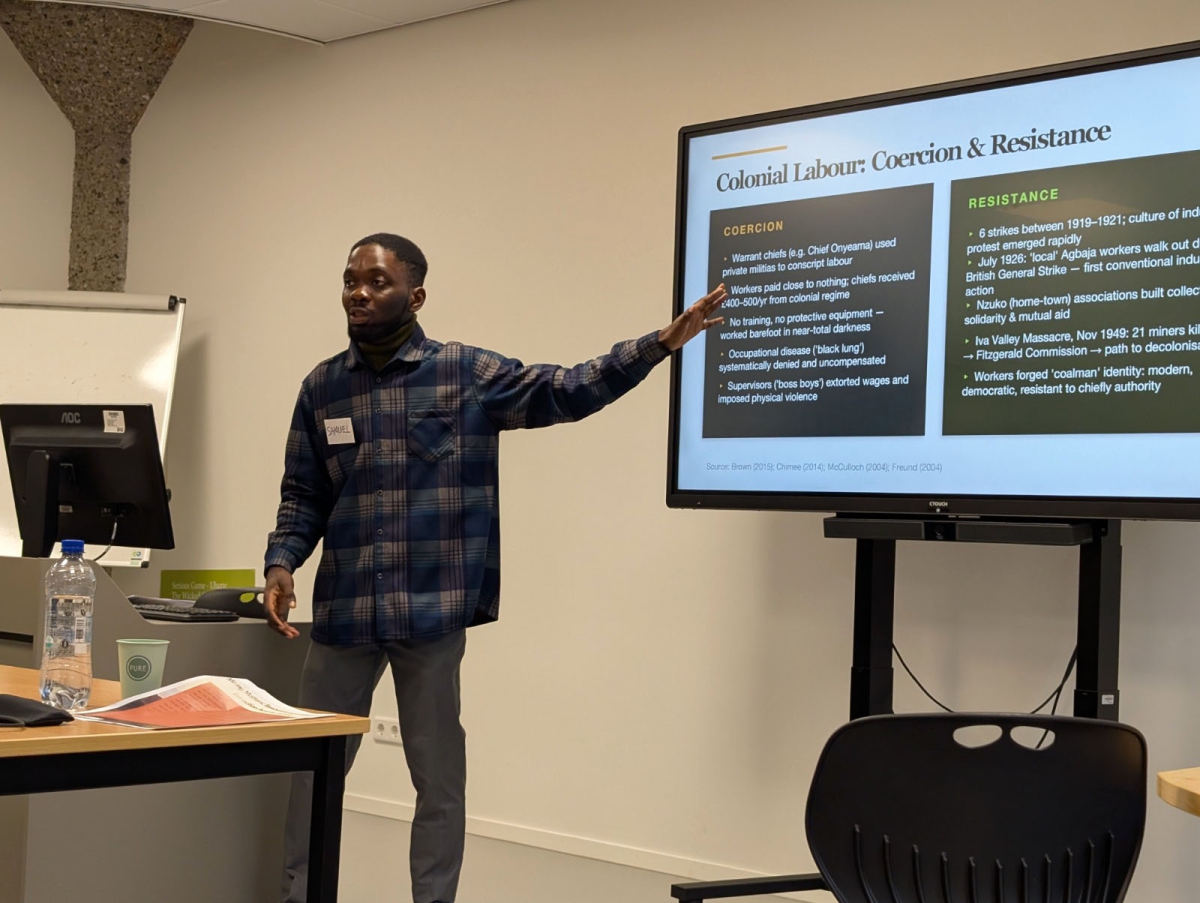
Renowned historian William Beinart, Emeritus Professor at St Antony’s College and the African Studies Centre of the University of Oxford, joined the conference online and spoke about the importance of agriculture to the former Apartheid economy in South Africa, as opposed to diamond and gold mining. Leiden University archaeologist Dr Gerrit Dusseldorp shared his work on Pleistocene hunter-gatherer mining practices in Southern Africa. Laura Van Erp discussed and showed her film ‘Minding Sand’, an observational documentary on contemporary sand mining in Sierra Leone. Samuel Udedibia, a fellow Research Master student, gave a presentation about the legacy of coal mining and identity in Enugu State, Nigeria.
Another highlight was the launch of the volume Gaping Holes: Towards Multispecies Histories and Ethnographies of Mining in Southern Africa (Brill; 2026), edited by Jan-Bart Gewald, Sabine Luning and Harry Wels. This innovative book offers histories and ethnographies of mining in Southern Africa in which the human is decentred, hence broadening our perspectives.
 Like most other participants, I left the conference with more questions than answers, for example: How do we construct the differences between what we call ‘artisanal’ and ‘formal’ mining? Why do mines still remain places of identity and nostalgia for some former mining communities, despite histories of oppression and coercion? How do mining activities become gendered, and what effect does this have on the women involved? Each presentation revealed the importance and complexity of a different theme related to mining.
We hope the conference will continue to be organised in the future, hopefully by the Master students of African Studies.
Jules Van de Port
Photos
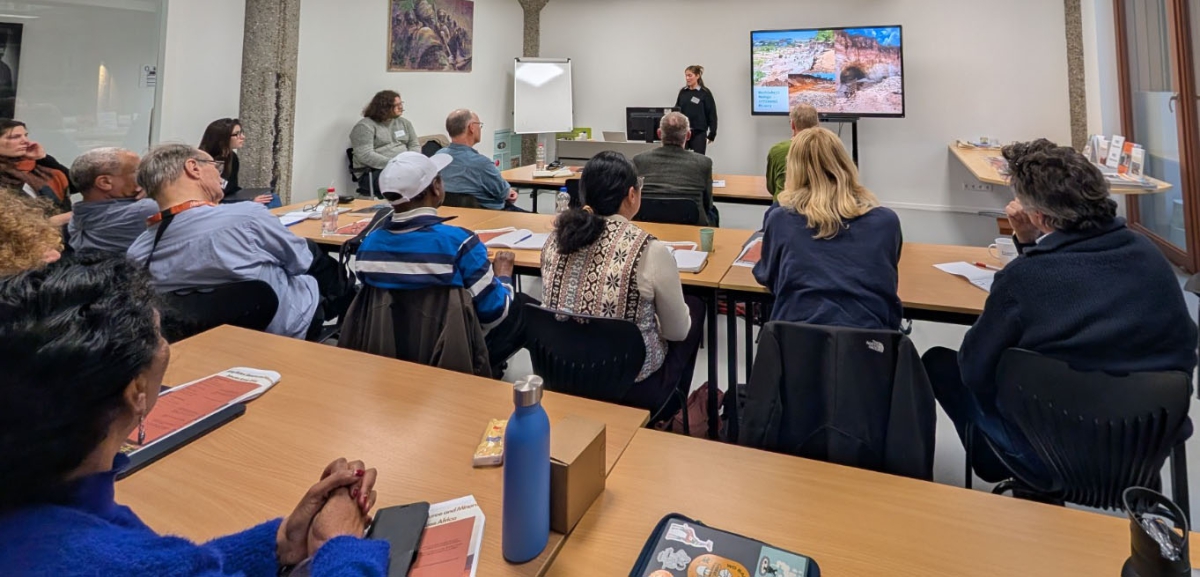
Top photo: recent research master graduate Artemis Mantheakis presenting
Middle photo: student Samuel Udedibia presenting
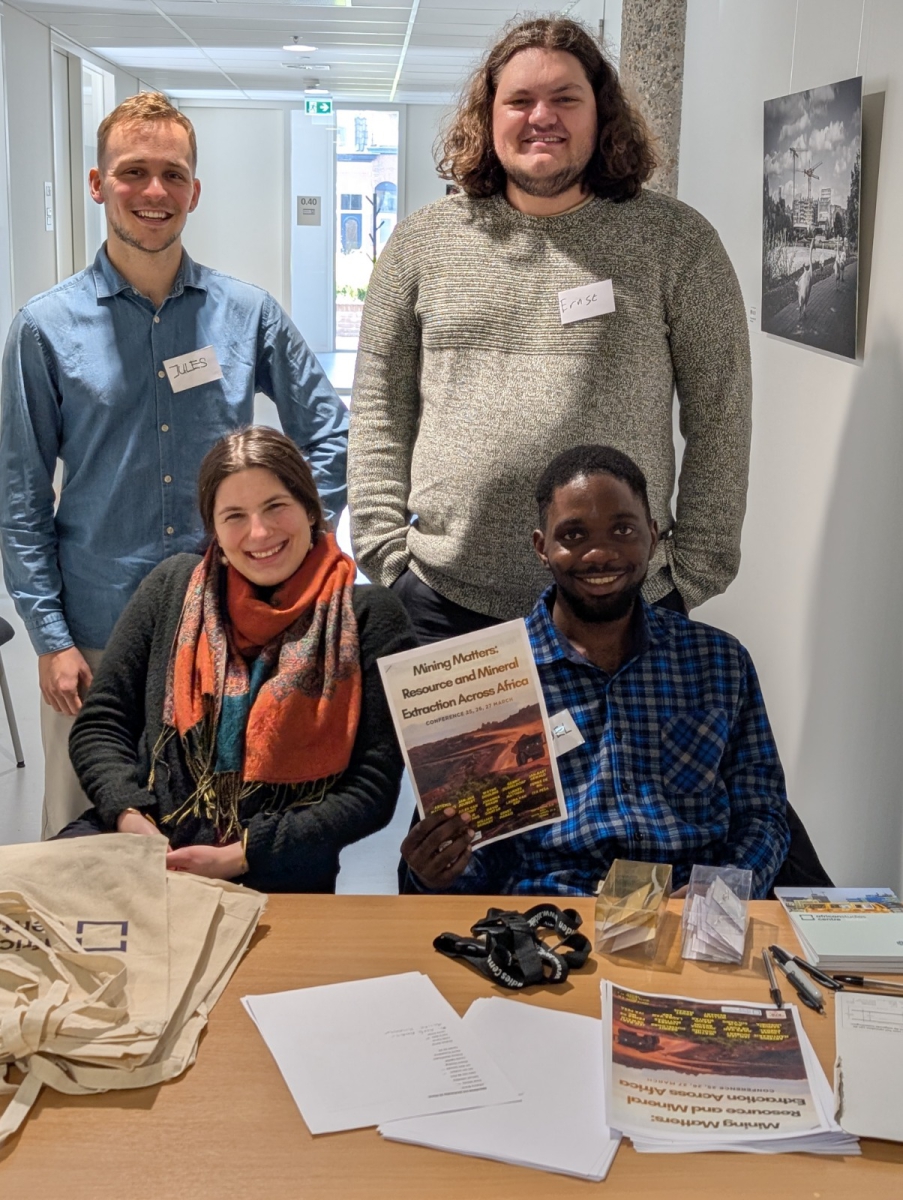
Lower photo: Organising team: Jules Van de Porte, Ernst Marais, Johanna Braun, and Samuel Udedibia
Posted on 10 April 2026, last modified on 4 June 2026