
New publications
New publications by ASCL staff and affiliates, and new books in our series, are frequently highlighted on this website. You may also use this RSS feed to keep informed. All recently added publications can be found in our database.
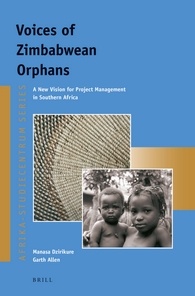 This is the first extensive empirical study of Zimbabwean orphans and other vulnerable children and young people. Chronically poor children and their carers can be corrupted or silenced by management systems which fail to recognise their basic human needs. Resilience in the face of such adversity is celebrated by the dominant project management ideology but is a major barrier to achieve sustainable improvements in the lives of vulnerable children. Manasa Dzirikure and Garth Allen propose a new person-centred project management approach.
Post date: 13 November 2014
 ASC researcher Akinyinka Akinyoade and Bisola Adebayo from Lagos State University Teaching Hospital, currently drafted to the Ebola Emergency Operations Centre (EEOC) in Lagos, have written an ASC web article about the Ebola outbreak in West Africa and elsewhere. The article goes beyond giving statistical updates of the spread of the Ebola virus; it highlights medical as well as socio-cultural issues, like the strong advise not to shake hands anymore - 'The social soul is now seen as a possible route of transmission of the dreadful disease' -, patients suffering from other diseases getting rejected at medical facilities, and rising foodstuff prices.
Post date: 09 October 2014
 The ASC has produced three brand new thematic maps. One in cooperation with Nuffic: 'Dutch cooperation programmes to strengthen post-secondary education and training in Africa (1996-2013)', one in cooperation with the Rotterdam School of Management: 'The challenge of Dutch sustainable diplomacy', and one in cooperation with the Netherlands Ministry of Foreign Affairs: 'Composition of financial flows to Sub-Saharan African countries: ten years into the Monterrey Consensus on the Millennium Development Goals'. The maps can be ordered at the ASC, free of charge.
Post date: 08 October 2014
Post date: 05 October 2014
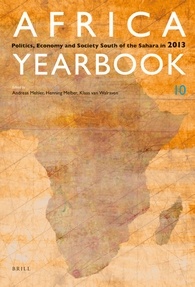 The Africa Yearbook 2013 covers major domestic political developments, foreign policy and socio-economic trends in sub-Saharan Africa – all related to developments in the calendar year 2013. The Yearbook contains articles on all sub-Saharan states, each of the four sub-regions (West, Central, Eastern, Southern Africa), an article on continental developments and one on African-European relations. Editors are Andreas Mehler (Institute of African Affairs, Hamburg), Henning Melber (Dag Hammarskjöld Foundation, Uppsala) and Klaas van Walraven (African Studies Centre, Leiden).
Post date: 26 September 2014
Post date: 26 September 2014
 ASC researcher Klaas van Walraven just published an article in Politique Africaine about the putsch by Seyni Kountché in Niger in 1974, which led to the fall of President Hamani Diori. The French were accused of involvement because Diori had had disagreements with them. During his research in the Paris archives, Van Walraven made a fascinating discovery: not only were the French not involved in the putsch, they actually started up measures for an airborne operation to save President Diori, code-named “Plan Somme”. Read the interview with Van Walraven about his discovery.
Post date: 12 September 2014
Post date: 25 August 2014
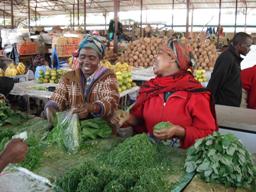 ASC researcher Wijnand Klaver contributed to an article in Chronica Horticulturae, coinciding with the XXIX International Horticultural Congress in Brisbane. While a healthy diet is based on a diversity of foods, in Africa many people rely on monotonous diets. As a consequence, more people suffer from ‘hidden hunger’ than from overt starvation. This article proposes for tropical Africa a doubling of the present intake of about 100 g of vegetables as a long-term realistic target.
Post date: 18 August 2014
Pages
Posted on 28 November 2016, last modified on 23 December 2016