

New publications
New publications by ASCL staff and affiliates, and new books in our series, are frequently highlighted on this website. You may also use this RSS feed to keep informed. All recently added publications can be found in our database.
 The ASCL Library has just published a bibliography of Stephen Ellis (1953-2015), who was an extremely productive researcher: Ellis published some 20 books and more than 130 scholarly articles. The bibliography starts with an introduction by Jos Damen (head of the ASCL Library) and contains a list of publications: books, articles & book chapters, book reviews, blogs, press articles and interviews. Suggestions for the revised edition of 2017 are welcome.
Post date: 05 December 2016
 The links between conservation and livelihood concerns remain much debated, and there is no agreement about the degree to which these concerns are linked, and how they should be tackled together. The main objectives of the PhD dissertation by Michiel van den Bergh are to uncover the local values of birds, the environment and conservation for rural people in Burkina Faso’s Sahel region, and to increase insights into interventions that aim to achieve integrated (migrant bird) conservation and sustainable development objectives in this area.
Post date: 28 November 2016
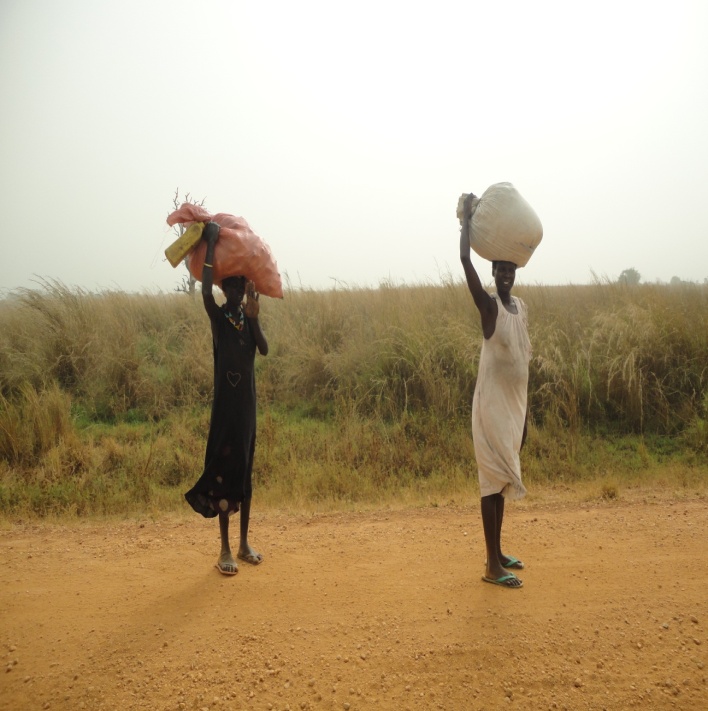 Maru Shete Bekele successfully defended his thesis on the Impacts of large-scale farming on local economic development, household food security and the environment in Ethiopia on 25 October at Leiden University. The study concludes that the approach of large-scale mechanized farming contributes little to the economic and agricultural transformation of the nation. Local people generally lose out in respect of land transactions and investments, and they are expropriated from their customary land rights to the benefit of national goals.
Post date: 28 October 2016
Post date: 27 October 2016
Wives-For-Hire: Revealing the practice of imposing fake wives in dispossessing family land in Africa
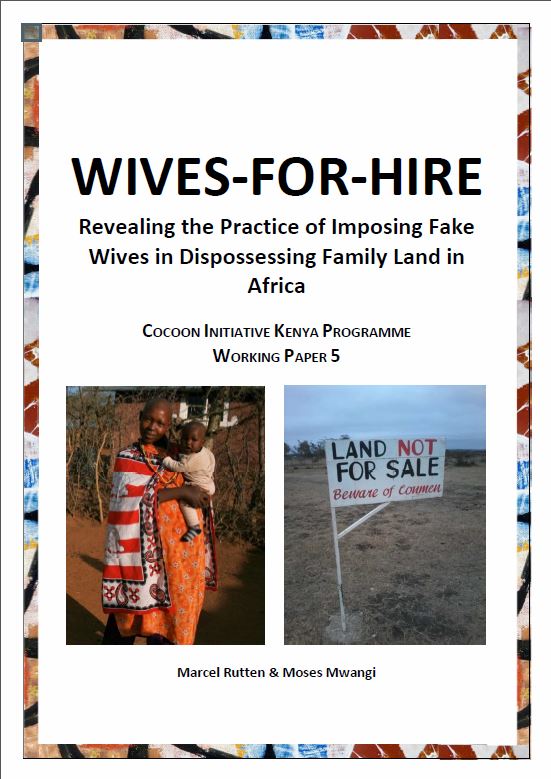 This is a Cocoon Initiative Kenya Working Paper. In it, Marcel Rutten en Moses Mwangi provide a short historical overview of land policy and land law development in Kenya and the way these have affected and still impact the position of women in Kenyan society. In particular, they present detailed cases of the use of fake wives by cheating husbands, in an attempt to convince the local Land Control Board that the intended sale of part of the family land is conducted with the full approval of the other household members.
Post date: 12 September 2016
Post date: 12 September 2016
 The scoping study on regional trade & investment in West Africa conducted by the ASCL in cooperation with LEI Wageningen UR and the European Centre for Development Policy Management (ECDPM) has now been finalized and has generated a number of written outputs.
Post date: 31 August 2016
 ASCL's Director Ton Dietz presented a paper at the 33rd International Geographical Congress in Beijing that took place from 21-25 August. The paper examines the evidence in Africa regarding the intentions of municipalities and their leadership to develop more sustainable cities, and to mobilise business and popular support for more sustainable futures in a continent that is likely to have the fastest urbanization trends in the decades ahead. Read the paper.
Post date: 18 August 2016
 The African Studies Centre's Annual Report for 2015 is out now! In 2015 we finalized preparations to become part of Leiden University as an interfaculty institute. It was also the year in which we lost our most successful researcher, Professor Stephen Ellis. You can read the Annual Report online; printed copies will be available soon.
Post date: 11 July 2016
Pages
Posted on 28 November 2016, last modified on 23 December 2016